Feng Shui Plants
9 Best Feng Shui Plants for Your Living Room (2026)
Discover the best feng shui plants for living room spaces, chosen for biophilic design, air quality, and visual balance.
The ModernQiHome Editorial Team researches and writes home wellness and modern Feng Shui guidance for Western homes, grounded in Eight Mansions (Ba Zhai) space theory and interior design fundamentals — every guide is written and fact-checked as a team process, not a single freelance byline.
Why plants matter in modern Feng Shui
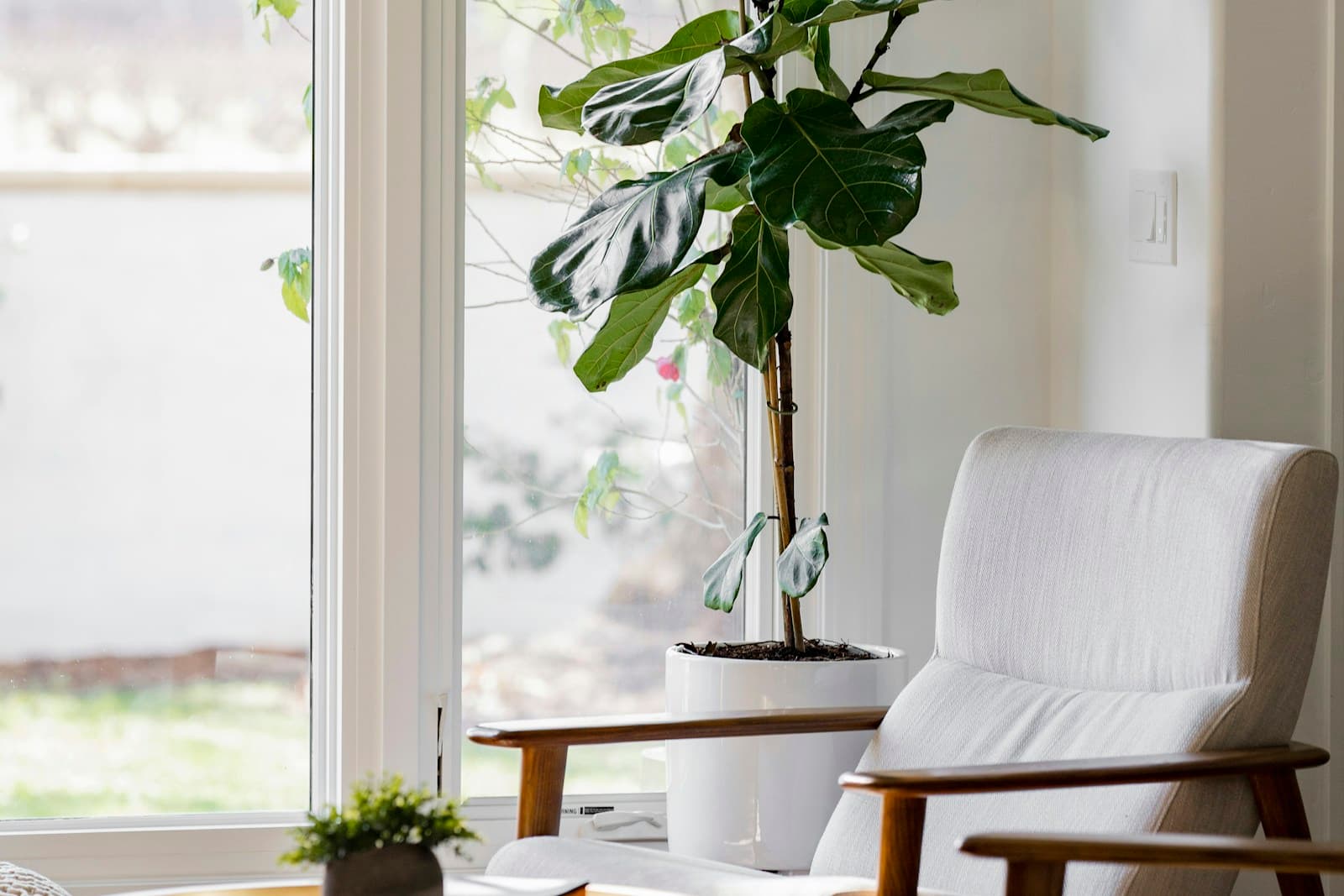
In traditional Feng Shui, living plants are valued because they represent Wood energy, a force associated with growth, flexibility, and renewal. In modern environmental psychology, the appeal is easy to explain without any mystical framing at all: greenery softens hard architectural lines, adds natural color variation, and has been linked in biophilic design research to lower reported stress and improved focus in indoor spaces.
Your living room is usually the most-used shared space in the home, which makes it a natural place to introduce a few well-chosen plants. Below are nine popular choices, each paired with a practical, renter-friendly reason they tend to work well in this room.
1. Money Tree (Pachira aquatica)
The braided trunk and layered leaves create a strong vertical line that draws the eye upward, which interior designers often use to make ceilings feel taller. It is also low-maintenance and tolerates indirect light, making it easy to keep healthy in apartments with limited sun exposure. Many people place it near a wealth corner as a design accent, though it works anywhere you want a sculptural focal point.
2. Jade Plant (Crassula ovata)
Jade's rounded, coin-shaped leaves give it a soft, approachable silhouette that pairs well with minimalist furniture. Succulents like jade also require infrequent watering, which suits renters who travel often or want a low-effort greenery option on a shelf or console table.
3. Lucky Bamboo (Dracaena sanderiana)
Despite the name, this is not true bamboo, but its clean vertical stalks are a favorite in small apartments because they take up very little floor space while still adding visible texture. It can grow in water alone, which makes it an easy reversible option if you are testing plant placement before committing to soil and pots.
4. Peace Lily (Spathiphyllum)
Peace lilies are frequently mentioned in indoor air quality studies for their ability to help filter common household compounds. Their broad, glossy leaves also contrast nicely against pale walls or neutral sofas, adding depth to an otherwise flat color palette without introducing visual clutter.
5. Snake Plant (Dracaena trifasciata)
Snake plants have upright, architectural leaves that read as orderly rather than busy, which is useful in a living room that already has a lot of furniture or decor. They also tolerate low light and irregular watering, making them one of the most forgiving options for beginners.
6. Areca Palm (Dypsis lutescens)
If your living room feels visually stiff or overly geometric, an areca palm introduces soft, arching movement that can balance out straight-edged furniture like bookshelves or media consoles. Its fuller shape also works well as a natural room divider in open-plan layouts, without the permanence of a built wall.
7. Rubber Plant (Ficus elastica)
The rubber plant's large, deep green leaves have a glossy sheen that reflects light in a way many people find visually soothing. It also grows well in a single spot for years, making it a good choice if you want one striking, low-rotation piece rather than several smaller plants.
8. Orchid (Phalaenopsis)
Orchids bring a refined pop of color without the visual heaviness of a large leafy plant, which makes them well suited to smaller side tables or shelves where floor space is limited. Their blooming cycle also gives the room a subtle sense of seasonal change, something environmental psychologists note can help a space feel less static over time.
9. Pothos (Epipremnum aureum)
Pothos vines are flexible and easy to train along a shelf, ledge, or hanging planter, which makes them ideal for renters who want greenery without needing floor space or heavy pots. Because they can be trimmed and reshaped easily, pothos is one of the simplest plants to adjust if you change your layout later.
Matching plants to your actual light
| Light level | Good picks |
|---|---|
| Bright, direct | Jade plant, orchid |
| Bright, indirect | Rubber plant, areca palm, money tree |
| Low / indirect | Snake plant, pothos, peace lily, lucky bamboo |
How to place these plants without overthinking it
A few practical guidelines can help you choose placement with confidence:
- Avoid clustering too many plants directly behind seating, as this can make a room feel visually crowded.
- Leave clear walking paths so plants do not interrupt the room's natural traffic flow, which supports a sense of ease when moving through the space.
- If you are also working with color for the year, this pairs well with ideas from year of the fire horse feng shui colors 2026 for a more coordinated palette.
- Rotate or reposition plants every few months if a spot isn't getting enough light, rather than forcing a plant to survive in a poor location.
All of these choices are fully reversible: a plant can be moved, repotted, or relocated to another room in minutes, which makes this one of the lowest-risk ways to experiment with Feng Shui principles at home.
A note on personal direction
Some people like to match plant placement to their personal directions from the Ba Zhai (Eight Mansions) method. If you want to explore that layer, the free Kua Number Calculator can help you find your supportive directions before you decide where each plant goes.
FAQ
Do feng shui plants for the living room need direct sunlight?
Most of the plants on this list, including snake plant, pothos, and jade, tolerate indirect or filtered light well. Bright, indirect light keeps growth fullest, but few of these need harsh direct sun.
Which feng shui plant is best for a small apartment living room?
Pothos and lucky bamboo work particularly well in small spaces since they need minimal floor space and can be trained along shelves or grown in water rather than heavy pots.
Can fake or artificial plants work for feng shui in a living room?
Traditional Feng Shui favors living plants for their association with growth and renewal, but a high-quality faux plant can still contribute the visual softness and biophilic benefits discussed here if live care isn't realistic for your space.
How do I know which light level my living room actually has?
Bright, direct light means several hours of unfiltered sun through a south-facing window. Bright, indirect means a sunny room without direct rays hitting the plant. Low light means an interior room or a window that gets minimal sun; if you can't comfortably read without a lamp during the day, treat it as low light.
Can I mix plants from different light categories in the same room?
Yes, as long as each plant is positioned according to its own needs, closer to the window for bright-light plants, further back or in shadier corners for low-light ones, rather than treating the whole room as one uniform light zone.
This article is intended as cultural appreciation and interior design inspiration, not a guarantee of any specific health, financial, or personal outcome.
If you'd like a more personalized starting point for arranging your living room, try the free Kua Number Calculator to find directions that align with your Kua number before placing your plants.
You might also like
7 Modern Feng Shui Crystals to Activate Your Wealth Corner
A modern guide to Feng Shui crystals for the wealth corner, with simple styling ideas for Western homes.
What Is a Kua Number? A Modern Feng Shui Explainer
What is a Kua Number, how it's calculated from birth year and gender, and how to use it as modern Feng Shui guidance at home.
7 Feng Shui Entryway Ideas for Small Apartments
Discover feng shui entryway ideas for small apartments that use lighting, scent, and layout psychology to create a more welcoming home.
Next step
Curious which plant placements suit your personal energy? Try the free Kua Number Calculator to find your most supportive directions.
Try the free calculator