Front Door Feng Shui
7 Feng Shui Entryway Ideas for Small Apartments
Discover feng shui entryway ideas for small apartments that use lighting, scent, and layout psychology to create a more welcoming home.
The ModernQiHome Editorial Team researches and writes home wellness and modern Feng Shui guidance for Western homes, grounded in Eight Mansions (Ba Zhai) space theory and interior design fundamentals — every guide is written and fact-checked as a team process, not a single freelance byline.
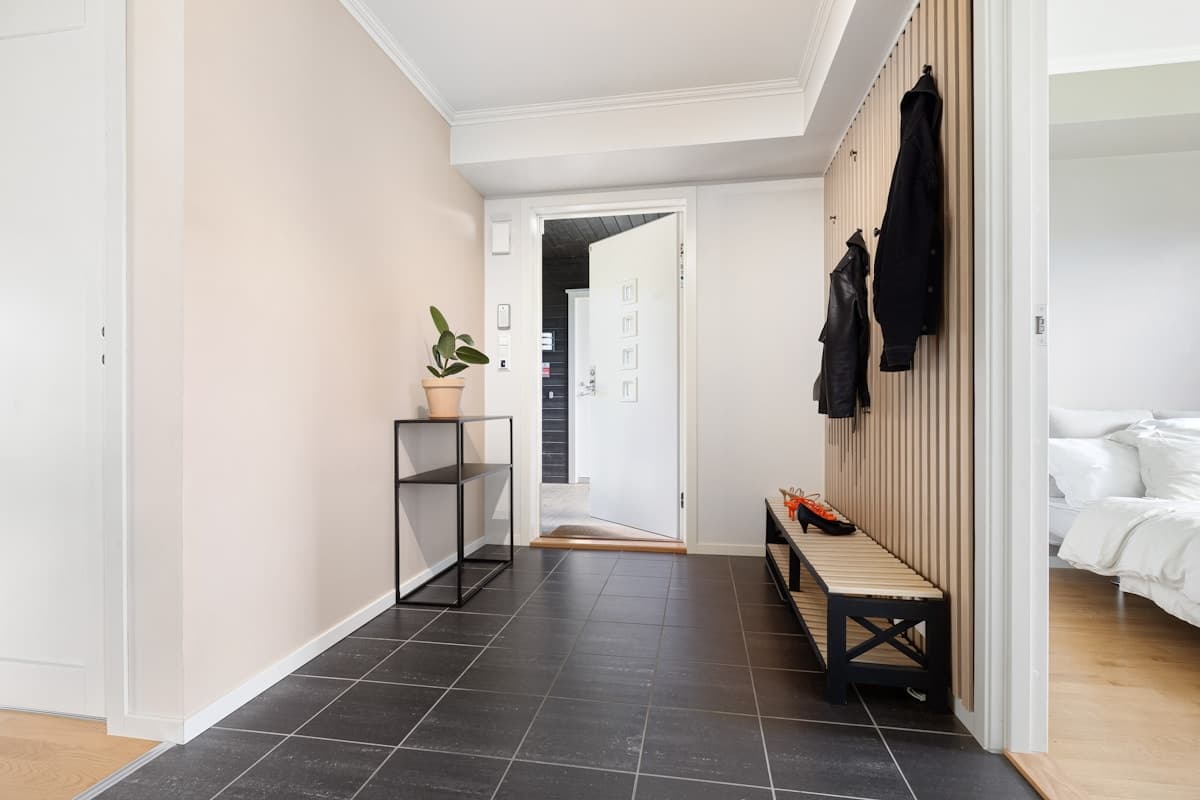
Why the entryway sets the tone for your whole apartment
In Feng Shui, the entryway is often called the "mouth of chi," the point where energy enters the home. In environmental psychology, there's a simpler explanation for why this space matters so much: it's the first thing your brain processes when you walk in, and first impressions shape mood faster than almost any other visual cue.
If your entryway is cluttered, dark, or cramped, that split-second scan can leave you feeling slightly tense before you've even taken off your shoes. The good news is that small apartments don't need extra square footage to fix this. They need better use of light, sightlines, and a few grounding objects.
Here are seven renter-friendly ideas that borrow from Feng Shui principles and modern design psychology, all fully reversible if you move.
1. Keep the path to the door visually clear
Space psychology tells us that clutter near a doorway increases what's called "visual load," the amount of information your eyes have to sort through in a glance. A crowded entry can feel more chaotic even if the mess is minor.
Try this: Keep at least a 24-inch clear path from the door inward. Move shoes, umbrellas, and bags into a basket or slim shelf rather than leaving them on the floor.
2. Add one warm light source near the door
Feng Shui associates the entry with the Fire element when warmth and welcome are the goal. In practical terms, warm lighting (around 2700K) tends to feel relaxing, similar to golden-hour sunlight.
Try this: A plug-in wall sconce or a small battery LED on a shelf can instantly soften a dim hallway without any wiring or landlord approval needed.
3. Use a mirror to open up tight entry space
Mirrors are a classic Feng Shui remedy for narrow or dark entries, symbolically "expanding" the space. Visually, mirrors genuinely do double perceived depth and light, which is why designers use them in small apartments constantly.
Just like the guidance in our related piece on mirror facing bed remedies, placement matters more than the mirror itself. In an entryway, position it beside the door rather than directly opposite it, so it reflects light and space rather than the immediate outside view.
4. Choose a scent that signals "arrival"
Feng Shui practitioners often recommend a light fragrance near the entry to mark a transition from outside stress to being home. This lines up with what scent researchers call "olfactory anchoring," where a consistent smell becomes linked to a feeling of safety and routine.
Try this: A small reed diffuser or a lightly scented sachet tucked into a shoe basket is enough. Avoid anything overpowering, since strong scents can raise alertness instead of easing it.
5. Ground the space with one natural material
Wood, stone, jute, and woven textures are traditional Feng Shui choices because they represent stability and the Earth element. In interior psychology, natural materials are linked to lower perceived stress compared to all-hard, all-glossy surfaces.
Try this: A small wood bench, a woven mat, or a ceramic dish for keys adds grounding texture without needing furniture assembly or wall damage.
6. Support the direction your door already faces
Feng Shui traditionally links each compass direction to different supportive colors and elements. Rather than guessing, you can check your door's orientation against our detailed guide on front door direction for the full breakdown.
This matters because color and orientation together can quietly shape how a space feels the moment you enter it, especially in small apartments where the entry, hallway, and living area often blend into one sightline.
7. Personalize your entry using your Kua number
Beyond compass direction, Feng Shui also considers your personal Kua number, a calculation based on birth year and gender that suggests which directions and color families tend to feel most supportive for you. If you're new to this idea, our guide on what a Kua number is explains the basics in plain language.
For a small apartment entry, this can be as simple as choosing a doormat, wall art, or accent color that aligns with your personal element rather than a generic trend color. It's a small, reversible way to make the space feel more "yours" the moment you walk in.
Sharing an entryway with roommates
In a shared apartment, a single entryway often has to work for several people's shoes, mail, and habits at once, which can undercut even a well-designed setup. The fix isn't more decor, it's more structure: give each person their own labeled basket or hook rather than one shared pile, so the entry stays legible at a glance instead of turning into a communal catch-all. A shared warm light and a shared clear floor path still benefit everyone, even if the smaller storage details are personal.
Putting it together in a tiny space
You don't need a mudroom or a walk-in closet to apply these ideas. A single well-lit shelf, one grounding object, a clear floor path, and a mirror placed thoughtfully can shift how an entire studio apartment feels in the first ten seconds after you open the door.
If you're also working on other zones of the home, our piece on how to find the wealth corner in your house is a natural next step, since entryways and wealth corners often sit close together in smaller floor plans.
FAQ
What's the single most impactful entryway change for a small apartment?
Keeping a clear walking path to the door tends to matter most, since visual clutter right at the entrance is processed almost instantly and affects how the whole space feels.
Do I need a full mudroom setup to apply feng shui in my entryway?
No. A single shelf, a basket for shoes, and one warm light source can cover most of the same ground as a larger dedicated entry space.
Can renters use feng shui entryway ideas without violating a lease?
Yes, all seven ideas in this guide, from lighting to mirrors to scent, are fully reversible and don't require painting, drilling, or permanent changes.
How do I keep a shared entryway from becoming a communal clutter pile?
Give each household member their own labeled basket, hook, or shelf slot instead of one shared catch-all space. Individual storage keeps the entry legible at a glance even when several people share it.
My entryway is just a few square feet with no room for furniture. What actually fits?
A single wall hook, a slim over-door shoe organizer, and a battery-powered puck light cover the three highest-impact ideas (clear path, warm light, grounding object) without needing any floor-standing furniture at all.
This article is intended as cultural appreciation and interior design inspiration, not a guarantee of financial, health, relationship, or professional outcomes. Small design choices can support a smoother daily routine, but they work alongside your habits and environment, not in place of them.
If you'd like entry colors and layout choices that reflect your own personal directions, try the free Kua Number Calculator and start mapping what feels most supportive for your specific space.
You might also like
Feng Shui Front Door Direction: What Actually Matters
Feng Shui front door direction explained through environmental psychology, light exposure, and easy renter-friendly design shifts for a tidier entryway.
Mirror Facing Bed? 5 Simple Feng Shui Remedies for Better Sleep
Modern Feng Shui remedies for a mirror facing the bed, explained through sleep, safety, and space psychology.
7 Modern Feng Shui Crystals to Activate Your Wealth Corner
A modern guide to Feng Shui crystals for the wealth corner, with simple styling ideas for Western homes.
Next step
Curious which entry colors and layouts suit you personally? Try the free Kua Number Calculator to find your supportive directions.
Try the free calculator