Bedroom Feng Shui
Mirror Facing Bed? 5 Simple Feng Shui Remedies for Better Sleep
Modern Feng Shui remedies for a mirror facing the bed, explained through sleep, safety, and space psychology.
The ModernQiHome Editorial Team researches and writes home wellness and modern Feng Shui guidance for Western homes, grounded in Eight Mansions (Ba Zhai) space theory and interior design fundamentals — every guide is written and fact-checked as a team process, not a single freelance byline.
Why mirrors can feel active in the bedroom
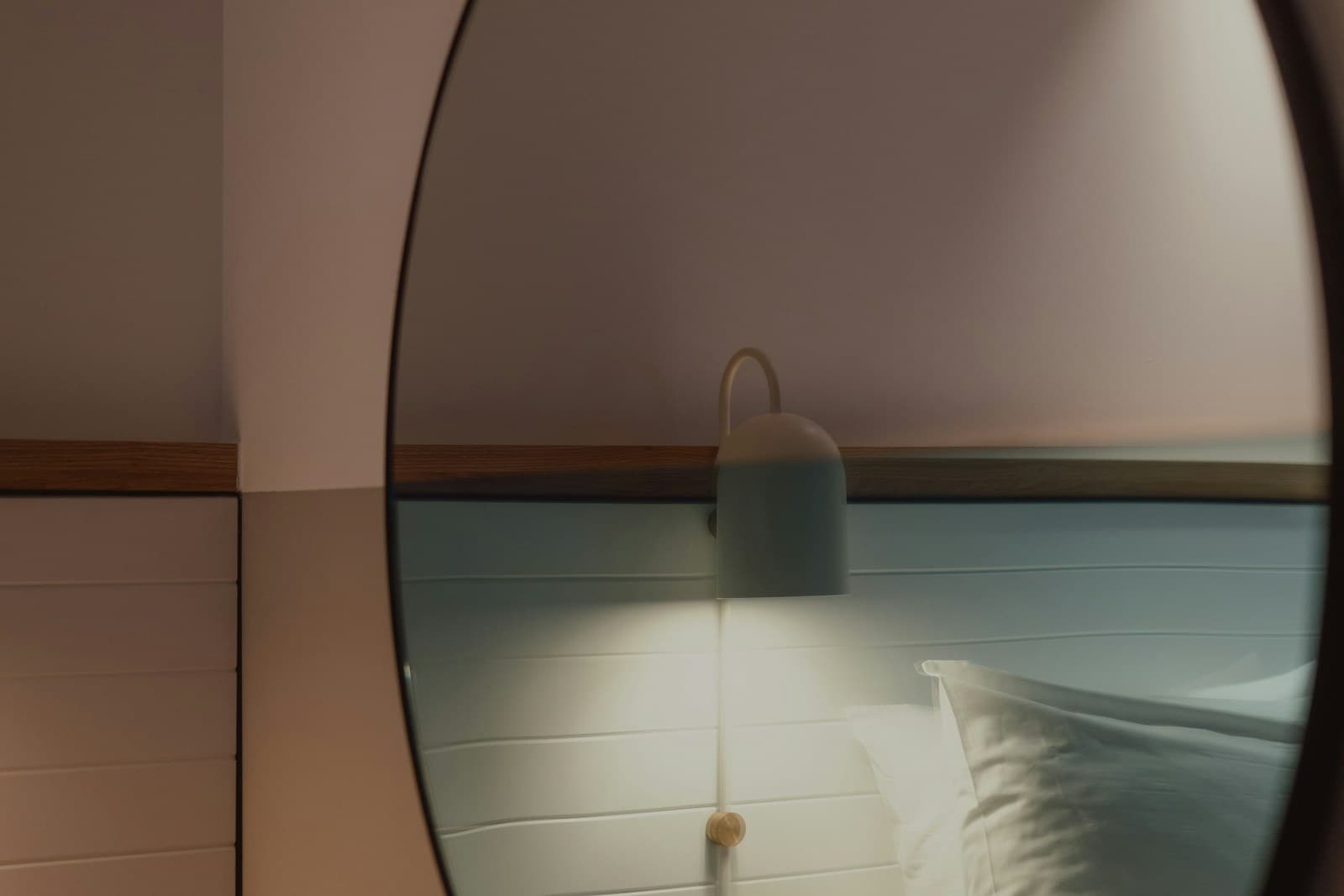
In Feng Shui, mirrors are often described as energy amplifiers. In space psychology, a mirror facing the bed can also feel visually active because it reflects movement, light, and the room back toward you.
If your sleep feels light or restless, the mirror may not be the only cause, but it is a simple design detail worth testing.
The sleep science behind the remedy
Sleep researchers have long noted that ambient light and movement in a bedroom can interfere with the wind-down process, even at low levels the conscious mind barely registers. A mirror facing the bed catches hallway light, screen glow, or headlights from outside and bounces them back across the room exactly where your eyes are closed — meaning the disruption happens right at the surface you're trying to rest on. This isn't unique to Feng Shui; sleep hygiene guidance independently recommends minimizing reflective and light-catching surfaces near the bed for the same reason. The traditional Feng Shui framing (mirrors as "energy amplifiers") and the modern sleep-science framing (mirrors as light and motion amplifiers) point to the same practical fix from two different vocabularies.
Five simple remedies, in more detail
- Move the mirror so it does not directly reflect the bed. Even a 30–45 degree angle change is often enough — the mirror doesn't need to leave the room, it just needs to stop pointing at where you sleep.
- Use linen curtains or a soft screen at night. A lightweight curtain track or a simple folding screen lets you keep the mirror fully functional during the day and close it off only when you sleep, which is often the easiest fix for renters who can't relocate furniture.
- Choose a smaller mirror with a softer frame. If you're shopping for a new mirror anyway, a smaller reflective surface in a matte or wood frame reflects less light and reads as visually quieter than a large frameless mirror.
- Place the mirror inside a closet door if possible. This keeps the mirror fully usable — you open the door to use it — while removing it from the sightline entirely when closed.
- Add grounding textures near the bed, such as wood, woven fabric, or a low-pile rug. These don't remove the mirror's effect directly, but they balance the room's overall visual energy, which matters if the mirror is only one of several reflective or high-motion elements in the space.
When a mirror facing the bed isn't actually a problem
Not every mirror needs a remedy. If your sleep is already solid, the mirror is small, or it only catches soft, indirect light rather than direct glare or hallway motion, there's likely nothing to fix. This guidance is most useful specifically for people who already notice restless or light sleep and are looking for a low-cost, reversible change to test — not a blanket rule that every bedroom mirror is a hazard.
Shared and kids' rooms
In a shared bedroom or a child's room, a full mirror relocation isn't always practical. The curtain or screen approach tends to be the most flexible option here, since it doesn't require permanent changes and can be adjusted by whichever person in the room is more sensitive to the effect. For younger children specifically, a soft nightlight paired with a covered mirror addresses both the light-and-motion concern and general nighttime comfort at once.
A modern rule of thumb
Your bedroom should help your nervous system feel safe. If a mirror creates visual alertness, soften it. Good Feng Shui should feel like better rest, not fear.
FAQ
Is it always necessary to remove a mirror facing the bed?
Not always. Softening the reflection with a curtain or repositioning it slightly so it no longer directly faces the bed is often enough, without needing to remove the mirror entirely.
Can I cover the mirror at night instead of moving it?
Yes. A lightweight curtain, cloth, or folding screen that you draw closed at night is a simple, renter-friendly way to reduce visual activity while keeping the mirror functional during the day.
Why does a mirror facing the bed affect sleep specifically?
A mirror reflects movement, light, and the room back toward you, which can register as subtle visual activity even while you're trying to wind down, an effect explained through space psychology rather than superstition.
Is there real sleep science behind this, or is it purely traditional belief?
Both explanations point to the same practical fix. Traditional Feng Shui describes mirrors as energy amplifiers; independently, sleep hygiene research recommends minimizing reflective and light-catching surfaces near the bed because they can bounce ambient light and movement back across the sleeping area. You don't need to choose one framework over the other to benefit from the remedy.
What if I can't move my mirror at all, for example in a small studio?
A curtain, cloth, or lightweight folding screen you draw closed only at night is the most practical fix when relocation isn't possible. It requires no permanent changes, works in rented or shared spaces, and still lets you use the mirror fully during the day.
You might also like
Year of the Fire Horse: The Best Feng Shui Colors for Your Home in 2026
Explore modern Feng Shui color ideas for the 2026 Fire Horse year, adapted for Western homes and warm interior design.
7 Modern Feng Shui Crystals to Activate Your Wealth Corner
A modern guide to Feng Shui crystals for the wealth corner, with simple styling ideas for Western homes.
Next step
For a better bedroom layout, try the free Kua Number Calculator and start mapping your supportive directions.
Try the free calculator