Gift & Bracelet Guides
Natural vs. Heat-Treated Citrine: What Buyers Should Know
Most citrine jewelry sold today is heat-treated amethyst, not natural citrine. Here's how the two differ, why it matters, and what a listing should actually disclose.
The ModernQiHome Editorial Team curates cross-store comparisons and cultural context — clearly labeled as curated research, not personal product testing.
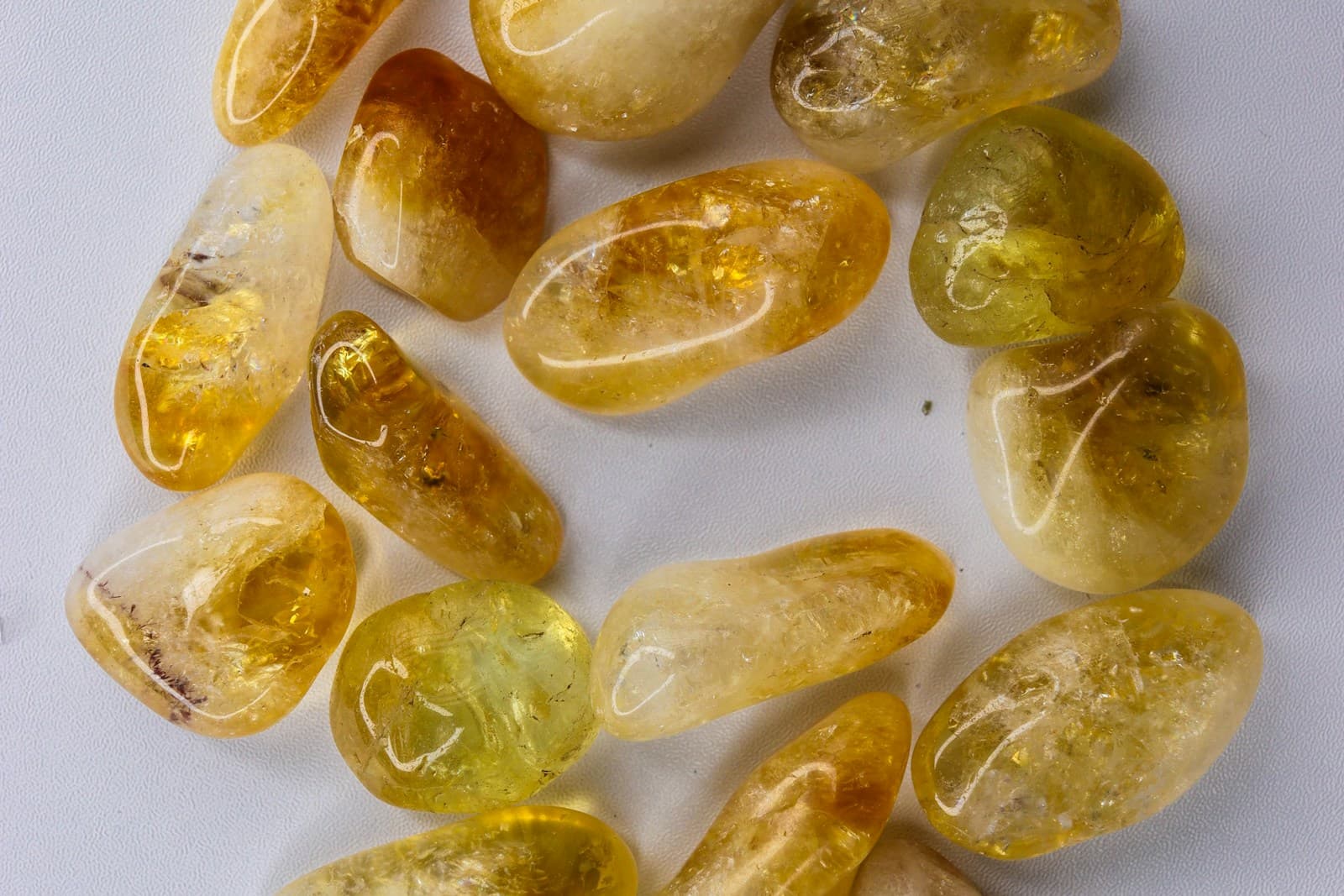
Most "citrine" jewelry isn't natural citrine
Here's the fact that surprises most first-time buyers: natural citrine is genuinely rare. The vibrant golden-orange color most people picture when they hear "citrine" is, in the large majority of commercial jewelry, heat-treated amethyst or smoky quartz. This isn't a scam or a secret — it's a standard, well-documented practice in the gem trade, and reputable sellers disclose it. The problem is that many casual listings simply don't say either way, leaving buyers to guess.
Natural, untreated citrine tends to be pale yellow to honey-colored, sometimes with a slightly smoky or grey undertone. Heat-treated material, by contrast, can reach the deep orange-to-reddish "Madeira citrine" color that natural stones almost never show on their own. If a bracelet listing shows saturated orange beads and doesn't mention treatment at all, heat treatment is the more statistically likely explanation — not a certainty, but a reasonable default assumption until the seller says otherwise.
Why the color difference happens
Quartz gets its color from trace iron impurities and how those impurities are structured at a microscopic level. Amethyst and citrine are chemically almost identical — both are forms of quartz with iron impurities — but the iron sits in a different structural state in each. Controlled heating (typically in the 878–1050°F / 470–560°C range, done by gem labs and cutters, not something a buyer can replicate at home) converts amethyst's iron structure into the one associated with citrine's yellow-orange color. The same heating process can also lighten or brighten naturally pale citrine.
This is standard, permanent, and stable — heat-treated citrine won't fade back or change color with wear. The issue for buyers isn't durability, it's pricing and disclosure: natural citrine commands a real premium in the gem trade specifically because it's uncommon, so a listing that implies "natural" without stating it is effectively overstating what you're paying for.
What a trustworthy listing should actually tell you
Since heat treatment isn't visible to the eye in a photo, and it's the industry-standard practice rather than an exception, the useful question isn't "does this look natural" — it's "does the seller say anything about treatment at all." Look for:
- An explicit treatment statement. "Natural, untreated citrine" and "heat-treated citrine" are both legitimate, sellable claims. The absence of either statement is the actual red flag — not the presence of the word "treated."
- Country/mine-of-origin claims paired with lab backing. A specific origin claim (Brazil is the most common commercial source) is a good sign of a seller who's done real sourcing, but it's not a substitute for a treatment disclosure.
- A GIA-informed description, not a GIA certificate on a $20 bracelet. GIA (Gemological Institute of America) publishes the reference material most gem descriptions are built on, but formal GIA certification is realistic for loose, higher-value stones — not for a mass-market beaded bracelet. What you should expect at this price point is a seller who clearly read and applied that reference material to their own listing, not a lab report.
What we won't do: claim we can verify a stone by photo
We want to be direct about a limitation here: no one can reliably tell natural citrine from heat-treated citrine, or citrine from citrine-colored glass, by looking at a product photo — including us. That distinction requires lab testing (spectroscopy, refractive index measurement, and similar tools), not a visual inspection. So when we compare listings below, we're comparing what each seller *discloses*, not authenticating the stones ourselves. If a listing is vague about material and treatment, we treat that vagueness as the data point, rather than guessing on the seller's behalf.
| Product | Material (as stated) | Treatment | Size | Price (incl. shipping) | Estimated delivery | Returns |
|---|---|---|---|---|---|---|
| 365 Days of Brilliance - Citrine Bracelet | 100% natural Citrine (Brazil), hand-selected | Page states stones are natural and hand-selected; no explicit statement on heat treatment or dyeing | 8mm (0.3in) | 30.95 | 2-4 days (US only; international not stated) | 30-day money-back guarantee, full refund no questions asked; return shipping cost not stated |
| The Ultimate Wealth Bracelet | Premium-quality Brazilian Citrine with Pi Yao (Pixiu) charm | 100% natural Citrine stated; no chemical treatment disclosed | 10mm (0.39in) | 35.95 | 2-4 days (US only; international not stated) | 30-day money-back guarantee; return shipping cost not stated |
Both of the listings above are worth a closer look for different reasons: one states "100% natural Citrine" outright, and the other doesn't make a treatment claim either way — which, per the standard above, is worth asking the seller about directly before buying if it matters to you.
Does it matter for everyday wear?
If you're buying a citrine bracelet as a gift, a personal style piece, or for its cultural association with warmth and optimism, heat-treated citrine is a completely reasonable, durable choice — it's how the large majority of affordable citrine jewelry is made, and there's nothing wrong with that as long as it's priced and described honestly. Where it matters more is if you're buying specifically *because* it's natural and rare, or paying a "natural citrine" price for a stone that's actually treated amethyst. In that case, the disclosure question above is the one to ask before checkout, not after.
FAQ
Is heat-treated citrine "fake" citrine?
No. Heat-treated citrine is still genuine quartz that has undergone a standard, industry-accepted treatment to reach its color — it's a different category from simulated or synthetic citrine (glass or lab-grown material sold as citrine), which is a separate and much bigger red flag. The distinction that matters for buyers is disclosure, not authenticity.
Can I tell if citrine is natural just by looking at it?
Not reliably. Color alone is a weak signal — natural citrine is usually paler, but heat-treated material can be made to look almost identical to pale natural stones, and only lab testing can confirm treatment status with certainty. Treat color as a rough hint, not proof.
Why is natural citrine more expensive than heat-treated citrine?
Because it's genuinely less common. Most of the citrine supply chain runs through heat-treating amethyst, since natural citrine deposits are comparatively rare, so untreated stones carry a scarcity premium in the gem trade.
Does treatment affect how long a citrine bracelet lasts?
No. Heat treatment is a stable, permanent process — a heat-treated citrine bracelet won't fade, change color, or become more fragile because of the treatment itself. Normal quartz durability and care guidance (avoid extreme temperature shocks, harsh chemicals) applies either way.
Next step
Ready to compare real listings side by side? Try the free Bracelet & Gift Finder to filter curated citrine and Pixiu bracelets by budget and size.
Try the free calculator