Home Wellness Psychology
What Is Yin and Yang in Feng Shui, Applied to a Real Room
Yin and yang in Feng Shui explained through light, sound, texture, and shape, with a worked example of rebalancing a bedroom-plus-desk and a dim living room.
The ModernQiHome Editorial Team researches and writes home wellness and modern Feng Shui guidance for Western homes, grounded in Eight Mansions (Ba Zhai) space theory and interior design fundamentals — every guide is written and fact-checked as a team process, not a single freelance byline.
The short answer
Yin and yang are a pair of complementary qualities. Yin is the quieter, darker, softer, cooler, more inward side of things; yang is the brighter, louder, harder, warmer, more active side. In Feng Shui, every room has a mix of both, and the goal is not a perfect 50/50 split. It's a mix that suits what the room is for.
A bedroom should lean yin because you sleep there. A kitchen or home office can lean yang because you work there. Trouble usually starts when a room's balance doesn't match its job: a bedroom lit like an office, or a living room so dim and heavy that nobody wants to spend time in it.
Two ideas that make yin and yang easier to use
Before applying the concept, two points from the original philosophy are worth keeping, because they're what stop it turning into a list of rules.
- Neither side is good or bad. Yin isn't "negative" and yang isn't "positive." A room with too much yang feels harsh and restless; a room with too much yin feels stagnant and gloomy. Both are imbalances.
- They're relative, not absolute. A lamp is yang compared to a dark corner, but yin compared to midday sun. That's why the same room can be too yang at night and fine during the day. The familiar black-and-white symbol shows this: each half contains a dot of the other.
What yin and yang look like in a room
Most physical qualities of a space fall somewhere on a yin-yang spectrum. This is the working vocabulary for the rest of this guide.
| Quality | More yin | More yang |
|---|---|---|
| Light | Dim, indirect, warm lamps | Bright, overhead, daylight-white bulbs |
| Sound | Quiet, muffled, soft furnishings | Echoing, TV or music on, hard floors |
| Texture | Soft, matte, fabric, wool, linen | Hard, glossy, glass, metal, lacquer |
| Shape | Rounded, low, horizontal | Angular, tall, vertical |
| Color | Deep, muted, cool, or earthy | Bright, saturated, high-contrast |
| Temperature | Cooler | Warmer |
| Activity | Resting, reading, sleeping | Cooking, working, exercising, hosting |
You'll notice this overlaps with the five elements: Fire is the most yang element and Water the most yin. The two systems are layered in traditional practice. Yin-yang tells you how active a room should feel, and the elements help you pick materials and colors to get there.
Which way should each room lean?
A rough target for common rooms:
- Bedroom: clearly yin. Sleep is the most inward, restful activity in a home.
- Bathroom: yin-leaning, although the hard, reflective surfaces are naturally yang, so textiles do a lot of work here.
- Living room: balanced, with the ability to shift. Brighter and more open when hosting, dimmer in the evening.
- Kitchen: yang-leaning. Heat, light, noise, and movement all belong here.
- Home office: yang-leaning, with enough softness that you can sit there for hours.
- Entryway: yang-leaning. A bright, clear entrance tends to feel more welcoming than a dark one.
Worked example 1: a bedroom that's also an office
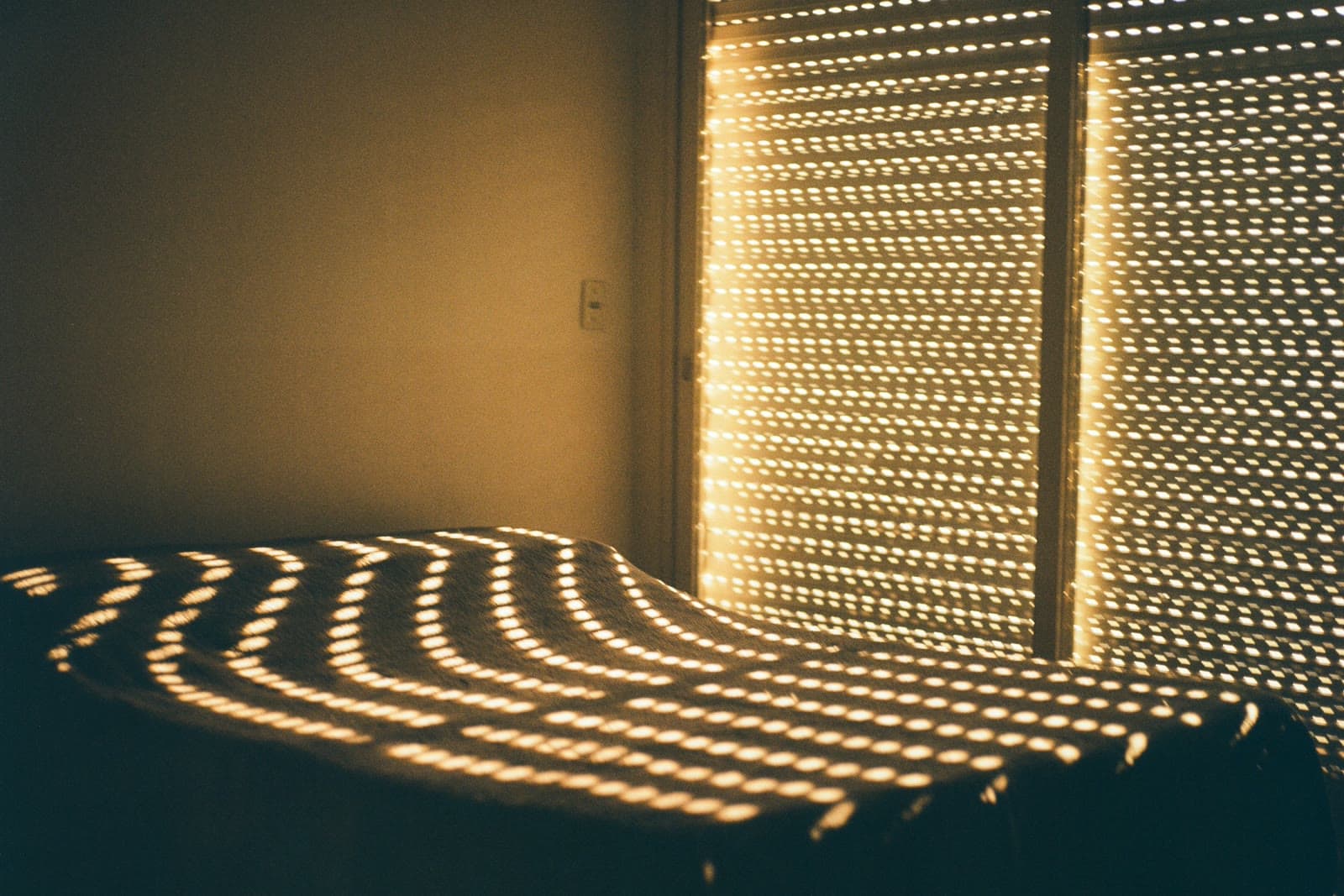
This is the most common yin-yang problem in small apartments. Picture a 12-by-11-foot bedroom with a queen bed against one wall and a desk against the other. There's a single ceiling fixture with a cool-white LED bulb, a monitor on the desk, a glossy white wardrobe, bare laminate floor, and blinds that don't fully close.
Run it through the table above and nearly everything lands on the yang side: overhead white light, a screen, hard reflective surfaces, an uncovered floor that echoes, and a work zone in view of the bed. It's a workspace that happens to contain a bed.
What we'd change, in order of impact:
- Move the light down and warm it up. Add a lamp with a warm (around 2700K) bulb on the nightstand and use it instead of the ceiling light after dinner. There's good sleep-research evidence that bright evening light can delay the body's shift toward sleep, so this is where Feng Shui and sleep science agree most clearly.
- Hide the work at night. A fabric throw over the monitor, a folding screen, or a closed laptop in a drawer turns the desk from "active" to "off." If the desk can face away from the bed, even better.
- Add soft surfaces. A rug beside the bed, heavier curtains or a blackout liner behind the blinds, and a fabric headboard all absorb sound and add the matte textures that pull a room toward yin.
- Round off a few edges. A round nightstand or a round mirror instead of another rectangle eases the room's all-angles look. It's a small change, but in a room full of boxes you'll see it.
Nothing on this list involves painting or moving walls, and the desk stays exactly where it is during the day. The room shifts between yang and yin by time of day, which is the concept working as intended. For bed-specific positioning, see our bed placement guide.
Worked example 2: a living room that's too yin
The opposite problem is less talked about but just as common. Picture a ground-floor living room with one north-facing window, a dark brown sectional, heavy curtains that stay half-closed, a deep charcoal rug, several piles of books and blankets, and one floor lamp in a corner.
Everything here leans yin: low light, deep colors, heavy soft furnishings, and stationary clutter. People often describe rooms like this as "cozy but draining." They're comfortable to sink into, but hard to get up and do anything in.
What we'd change:
- Add light in layers. A second and third light source at different heights (a table lamp, a picture light, a plug-in wall sconce) does more than one brighter bulb, because it lifts the dark corners where the heaviness comes from.
- Open the window fully. Swap the heavy curtains for lighter linen panels during the day, or tie them back all the way. A north window gives soft, even light, and there's no reason to block it.
- Introduce a few yang accents. A brass lamp base, a glass vase, a mirror placed to bounce light from the window, or a single brighter cushion color. You don't need many; one or two yang notes stand out in a yin room.
- Clear the horizontal surfaces. Clutter in Feng Shui is treated as stuck energy. In practical terms, piles make a room feel heavier and give the eye nowhere to rest. Our decluttering guide has a room-by-room plan.
The psychology behind the concept
Yin and yang come from Chinese philosophy, not from design research, and nothing here requires treating them as literal forces. The practical overlap with modern thinking is fairly direct, though:
- Lighting affects alertness and sleep. Bright, cool light is associated with alertness; dim, warm light fits the evening. That lines up with the yang/yin light column in the table above.
- Acoustics shape how busy a room feels. Hard surfaces reflect sound and make a room feel louder and more active; soft furnishings absorb it.
- Matching a room to its activity reduces friction. Designers talk about this as "zoning." Yin-yang is an older, more intuitive way of saying the same thing: a room should support what you actually do in it.
FAQ
I live in a studio. How can one room be both yin and yang?
By time of day and by zone. Keep the sleeping corner consistently yin (soft textiles, low lamps, screens out of sightline) and let the rest of the room run more yang during the day. A rug or open shelving between zones helps mark the switch. Our studio apartment layout guide walks through the zoning in detail.
My partner likes the bedroom bright and I like it dark. Who's right?
Traditional guidance favors a yin-leaning bedroom for sleep, but you don't have to pick a winner. Separate lighting on each side of the bed, blackout curtains that can be opened in the morning, and a dimmer switch let the room run brighter when one of you is awake and darker when you're both sleeping.
Is a black bedroom wall too yin?
Not automatically. Dark walls can work well in a bedroom, which is meant to lean yin. It becomes a problem if the room is also dim, heavily furnished, and cluttered, with nothing lighter to balance it. Pale bedding, a warm lamp, and one reflective surface are usually enough to keep a dark wall from feeling closed-in.
Our home office gets no natural light. Is it doomed to be too yin?
No. It means the yang has to come from somewhere other than a window: bright, neutral-white task lighting, a lamp aimed at the wall to spread light, lighter desk surfaces, and a plant under a grow light. Upright shapes and a clear desk also push the room toward the more active side.
Do I need to know my Kua Number to balance yin and yang?
No. Yin-yang balance is about how a room feels and functions, and it applies to anyone. Your Kua Number is a separate layer about which directions tend to suit you. You can use either on its own.
This article is offered as cultural context and interior design inspiration, not a guarantee of financial, health, relationship, or professional outcomes.
You might also like
What Is Feng Shui? A Modern Guide for Western Homes
What is Feng Shui and how does it actually work? A clear, jargon-light explainer for Western readers, translating chi, yin-yang, and the five elements into home design terms.
Feng Shui Five Elements (Wu Xing) Explained for Modern Homes
The Feng Shui five elements (Wood, Fire, Earth, Metal, Water) translated into materials, colors, and shapes you already own, plus a simple way to audit and rebalance a real room.
Feng Shui Bed Placement: The Complete Modern Guide
Learn feng shui bed placement through sleep science and space psychology, with renter-friendly tips for the command position, headboards, and more.
Next step
Want a personal starting point before you rearrange? Try the free Kua Number Calculator to see which directions tend to suit you.
Try the free calculator