Front Door Feng Shui
Feng Shui Doormat: Best Colors, Shapes & Placement Rules
Choosing a feng shui doormat? Learn the best colors, shapes, and placement rules for a tidier entryway, explained through environmental psychology.
The ModernQiHome Editorial Team researches and writes home wellness and modern Feng Shui guidance for Western homes, grounded in Eight Mansions (Ba Zhai) space theory and interior design fundamentals — every guide is written and fact-checked as a team process, not a single freelance byline.
Why your doormat matters more than you think
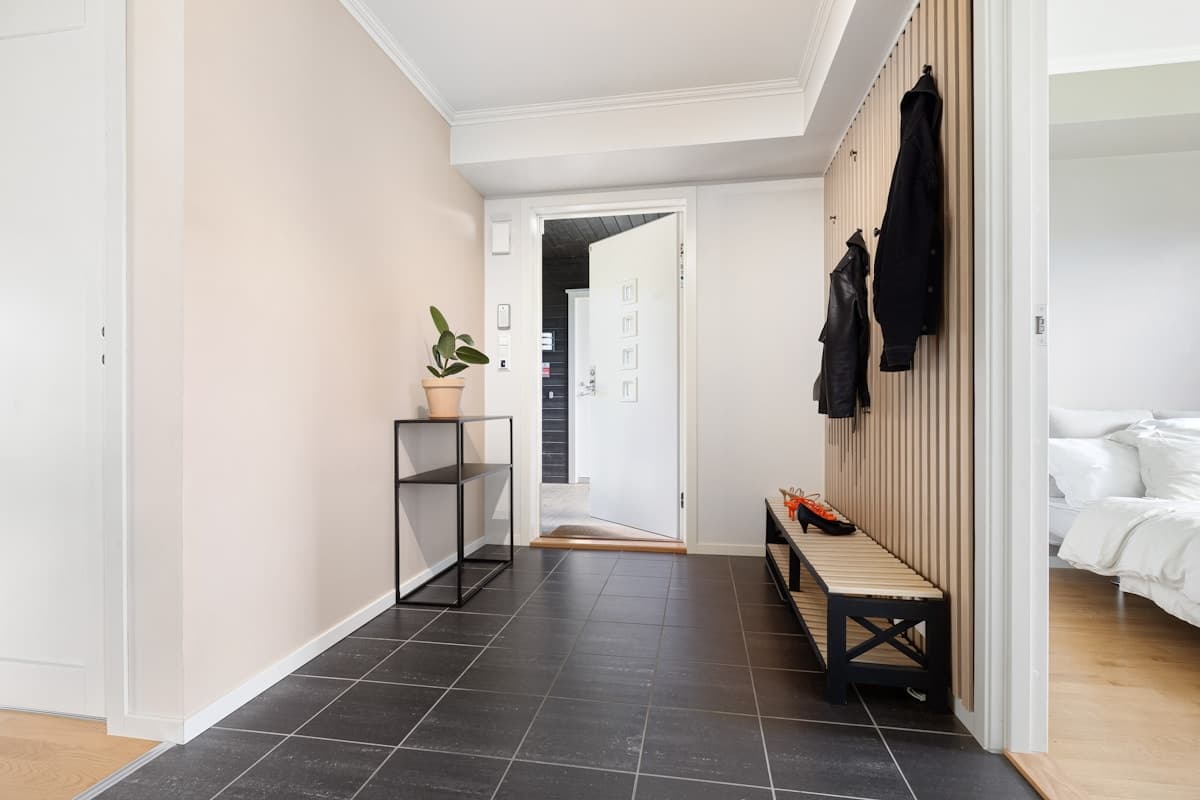
The entryway is the first space your eyes and nervous system register when you arrive home. In Feng Shui, this threshold is often called the mouth of chi, the point where energy, light, and movement enter the house. In environmental psychology, this same spot is known as a transition zone, a small buffer where your brain shifts from outside-alert mode into at-home-relaxed mode.
A doormat sits right in that buffer. Its color, shape, and condition quietly shape how welcoming, orderly, or chaotic that transition feels, before you even turn the key. If your entryway feels rushed or cluttered every time you walk in, the mat is a small, renter-friendly detail worth adjusting first.
Feng Shui doormat mistakes and fixes
Mistake 1: A worn-out or frayed mat
A cracked, faded, or curling mat is one of the first details your eyes catch, and visual clutter at an entrance has been linked to a lower sense of home satisfaction in environmental psychology research. It can also make the transition into your home feel less settled, since a damaged object at the threshold signals neglect rather than care.
Fix: Replace a worn mat every one to two years, or as soon as the edges fray. This is one of the simplest, cheapest upgrades in the entire house, and it works in any rental without needing landlord approval.
Mistake 2: The wrong shape for your door
Sharp, aggressive angles pointed directly at a narrow doorway can make an entry feel visually tense, since the eye has to process a mismatch between the mat's shape and the door frame. Rounded or softly rectangular mats tend to feel more settled against most standard door widths.
Fix: Match the mat's proportions to your doorway. A wide, low rectangle usually suits a standard front door best, while a rounded mat can soften a narrow apartment hallway entrance or a shared building corridor.
Mistake 3: A color that clashes with your entrance direction
In Feng Shui, each compass direction is associated with an element and a supportive color palette. A doormat color that fights against your entrance direction will not create a curse or misfortune, but it can create a subtle visual dissonance every time you glance down, similar to walking into a room where the accent color feels slightly off.
Fix: If your door faces south, warm reds, oranges, or terracotta tones can feel harmonious. North-facing doors often pair well with deep blues or black. East and southeast doors tend to suit greens and browns, while west and northwest doors often feel balanced with white, grey, or soft metallics. If you are unsure which direction applies to you personally, the free Kua Number Calculator can help you map your supportive tones, and this guide on front door direction goes deeper into compass-based color choices.
Mistake 4: Placing the mat too close or too far from the door
A mat pushed flush against the door can feel cramped, forcing an awkward shuffle every time the door swings open. A mat placed too far away creates a visual gap that reads as unfinished or undefined, similar to a room where furniture floats without anchoring.
Fix: Leave just enough space for the door to open freely, then set the mat so its edge sits a few inches back from the threshold. This small buffer gives the entry a sense of being planned rather than an afterthought.
Mistake 5: Using the same generic mat as every neighbor
In apartment buildings and shared hallways, identical builder-grade mats outside every door can make it harder for your own brain to register your unit as distinct, a phenomenon related to visual landmark recognition. Coming home should feel like arriving somewhere specific, not scanning a row of lookalike doors.
Fix: Choose a mat with a slightly different texture, color, or pattern than your neighbors, even if it is a small change like a woven jute edge or a muted color instead of plain black. This is fully renter-friendly since it requires no permanent changes, only a swap of your own mat.
Door direction to color, at a glance
| Door faces | Lean into |
|---|---|
| South | Warm reds, oranges, terracotta |
| North | Deep blues, black |
| East / Southeast | Greens, browns |
| West / Northwest | White, gray, soft metallics |
A modern rule of thumb for doormats
Your entryway sets the emotional tone for the rest of the home. A clean, well-placed, appropriately colored mat is a small signal to your own mind that this is a cared-for space. If you are also working on the rest of your entry, this guide to small apartment entryways covers layout ideas that pair well with a fresh doormat.
FAQ
Does the shape of a doormat really matter in Feng Shui?
Shape is considered a minor but noticeable detail, since sharp or mismatched angles at a doorway can create subtle visual tension. Choosing a mat shape that fits your door's proportions is a simple way to make the entry feel more settled, without needing any structural changes.
What is the best doormat color if I do not know my house direction?
Neutral tones like warm brown, sand, or soft grey work as a safe default for almost any entrance, since they tend to blend with most exterior color palettes. If you want a more personalized answer, using the free Kua Number Calculator can help you find directional colors that suit you specifically.
Can I use two doormats, one outside and one inside?
Yes, and many modern entryways benefit from this layout. An outdoor mat handles dirt and debris, while an indoor mat adds a softer visual transition and a place to pause before stepping fully into the home, reinforcing the sense of a real threshold.
Do I need to remove my doormat if I move or sell my home?
There is no strict requirement to do this. Many people choose a fresh doormat when moving into a new space simply as a way to mark a new chapter and start the entryway with a clean, new object, which can feel refreshing rather than necessary.
What if my building requires a uniform doormat style?
Work within the shared texture or size requirement, and personalize through color or a small accent nearby, like a potted plant, instead. Most of the effect comes from the mat being clean and well-placed, not from unlimited style freedom.
Is a natural fiber mat better than a synthetic one?
Natural fibers like jute or coir tend to read as warmer and more grounding, aligning with Earth-element styling, while synthetic mats are often more weather- and stain-resistant. Either works; pick based on your climate and how much upkeep you want.
This article is intended as cultural appreciation and interior design inspiration for a tidier, better-organized entryway, not a guarantee of any financial, health, relationship, or professional outcome. For a more personalized starting point, try the free Kua Number Calculator and explore which directions and colors feel most supportive for your own front door.
You might also like
Feng Shui Front Door Direction: What Actually Matters
Feng Shui front door direction explained through environmental psychology, light exposure, and easy renter-friendly design shifts for a tidier entryway.
7 Feng Shui Entryway Ideas for Small Apartments
Discover feng shui entryway ideas for small apartments that use lighting, scent, and layout psychology to create a more welcoming home.
Feng Shui House Numbers: Do They Really Matter?
Curious about feng shui house numbers? Learn what your address really signals through numerology, attention bias, and simple entryway design fixes.
Next step
Curious which doormat colors support your personal energy? Try the free Kua Number Calculator to find your direction before you shop.
Try the free calculator