Feng Shui Plants
Feng Shui Plants for the Bedroom: Best Picks and Ones to Skip
Feng shui plants bedroom guide: which plants support sleep and air quality, which to avoid, and renter-friendly placement tips for small spaces.
The ModernQiHome Editorial Team researches and writes home wellness and modern Feng Shui guidance for Western homes, grounded in Eight Mansions (Ba Zhai) space theory and interior design fundamentals — every guide is written and fact-checked as a team process, not a single freelance byline.
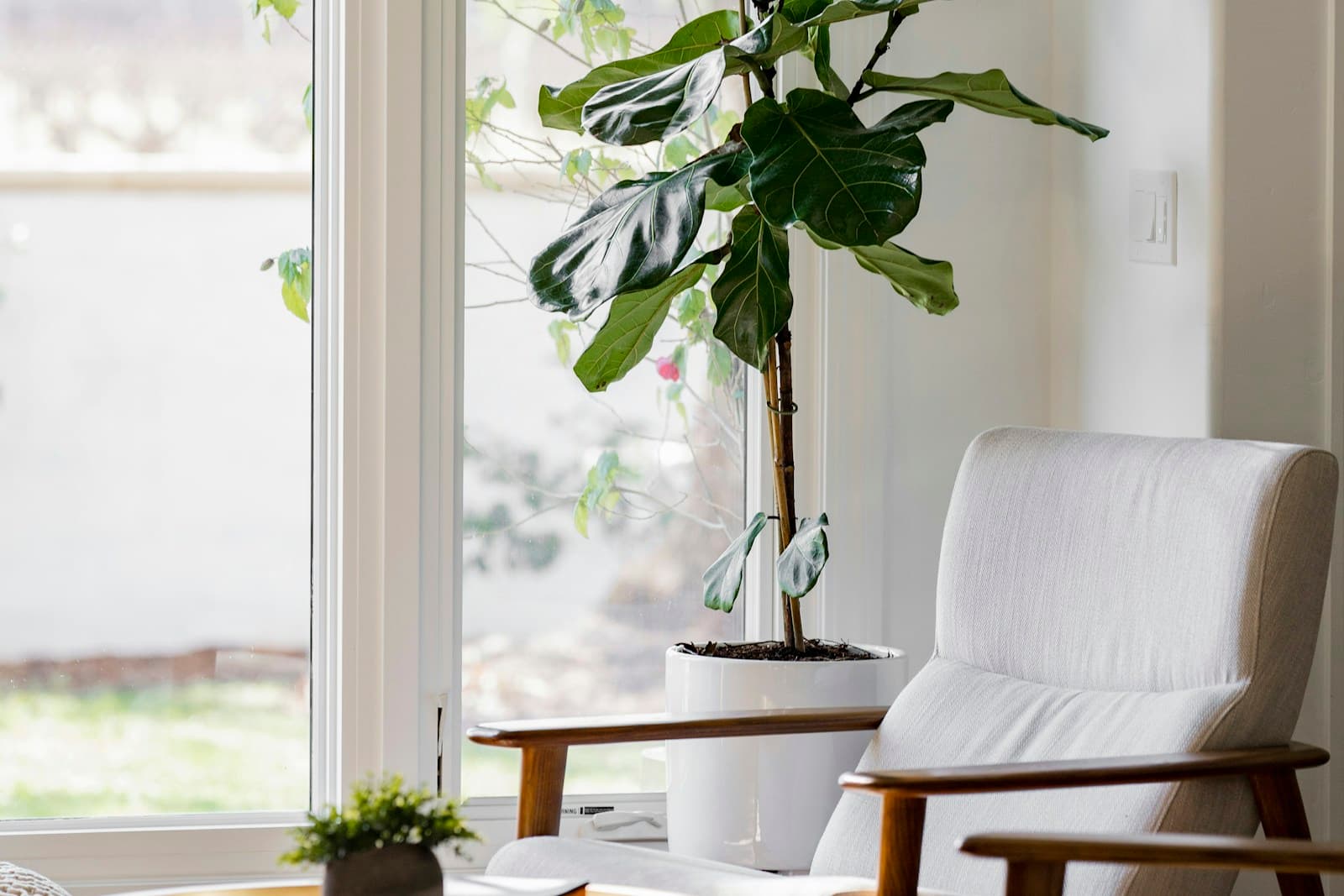
Why bedroom plants matter more than people think
Plants get recommended for almost every room, but the bedroom is different. This is the one space where your nervous system is supposed to fully power down, so the wrong plant choice, or the wrong placement, can quietly work against the rest you are trying to get.
In Feng Shui, plants are associated with the Wood element, which brings growth and vitality. In environmental psychology, greenery has a well-documented stress-reducing effect tied to biophilia, our instinctive response to natural forms. The trick for a bedroom is balancing that vitality with stillness, since a room that feels too energized can make it harder to wind down.
If you rent, share a room, or work with a small apartment layout, the good news is that none of this requires a renovation. It just requires a few swaps.
Feng Shui plant mistakes and fixes
Mistake 1: Filling a small bedroom with too many large plants
A bedroom crowded with oversized leafy plants can feel visually busy, and busy visual fields have been linked to slower mental wind-down before sleep. In a small apartment or shared room, every extra shape your eyes have to process at night adds a bit of stimulation you do not need.
The fix: choose one or two smaller plants instead of several large ones. A single focal point, like a small pothos on a dresser, does more for the room than a cluster of pots competing for attention.
Mistake 2: Choosing high-maintenance plants that stress you out
A finicky plant that constantly wilts or needs daily attention can become a low-level source of guilt or frustration, which is the opposite of what a bedroom is for. This is less about symbolism and more about basic stress load: a dying plant by your bed is a visual reminder of unfinished tasks.
The fix: pick resilient, low-maintenance species like a snake plant or a ZZ plant. Both tolerate low light and irregular watering, which makes them realistic choices for renters who travel or forget watering schedules.
Mistake 3: Placing spiky or thorny plants close to the bed
Cacti and other spiky plants are often flagged in Feng Shui because their sharp forms create what is sometimes called 'cutting energy' aimed at the sleeper. From a space psychology angle, sharp angular shapes near where you sleep can register as subtly alerting to the eye, even at a subconscious level, compared to soft, rounded foliage.
The fix: keep spiky plants in a living room or office instead, and choose soft-leafed varieties like a peace lily or a pothos for anywhere within a few feet of the bed.
Mistake 4: Avoiding bedroom plants altogether
Some guides suggest skipping plants in the bedroom entirely, which can mean missing out on real benefits like improved air quality and a softer, more grounded room. Certain plants, including snake plants, release oxygen at night rather than absorbing it, which pairs well with a restful bedroom environment.
The fix: instead of avoiding plants, be selective. One well-chosen, easy-care plant placed away from the direct sightline of the bed can support the room without overwhelming it.
Mistake 5: Placing plants directly in the command position
The command position, the spot where you can see the door from bed without being directly in line with it, is meant to feel supported and clear. A tall or oddly shaped plant blocking that sightline can undercut the sense of visual openness this layout is meant to provide, whether you are working with a feng shui bed placement guide or just eyeballing the room.
The fix: keep the space between your bed and the door open, and place plants along a side wall or in a corner instead.
Quick reference: keep vs. skip
| Keep | Skip near the bed |
|---|---|
| Snake plant | Cactus and spiky succulents |
| Peace lily | Bonsai |
| Pothos | Strongly scented flowering plants |
| Bamboo palm | Anything oversized for the room |
Sharing a bedroom with a partner or roommate
If you share the room and only one of you wants plants, a compromise placement, one modest plant on a shared dresser or shelf rather than several scattered pots, usually satisfies both preferences. Since the concern for most people is visual clutter or a spiky shape near the bed rather than plants generally, a single well-placed pothos or snake plant rarely bothers someone who's simply plant-neutral.
Best low-maintenance plants for the bedroom
- Snake plant, for air quality and near-total neglect tolerance
- Peace lily, for soft rounded leaves and a small humidity boost
- Pothos, for easy care and a trailing shape
- Bamboo palm, for a lush look without sharp lines
Plants to keep out of the bedroom
- Cactus and other spiky succulents, better suited to a desk or entryway
- Bonsai, which can carry a restrained, stunted-growth association some prefer to avoid near rest areas
- Strongly scented flowering plants, which can be overstimulating in a small, enclosed room
If you are also working with a small apartment entry or a home office nearby, the same logic about shape and placement applies. You can see it applied to entry spaces in this guide to feng shui entryway ideas for small apartments.
FAQ
Can I keep any plants in a small bedroom without crowding it?
Yes. The key is scale, not quantity avoidance. One or two compact plants, like a small pothos on a nightstand or a snake plant in a corner, add greenery without adding visual clutter, which matters more in a small room than in a spacious one.
Do fake or artificial plants work for Feng Shui purposes?
High-quality artificial plants can offer a similar visual softness and biophilic benefit for people who travel often or lack natural light, though real plants are generally preferred because they also support air quality through natural processes like oxygen exchange.
Is it true that cacti bring negative energy to a bedroom?
Rather than framing it as negative energy, think of it as a shape and attention effect: sharp, spiky forms are more visually alerting than soft, rounded ones, which is why they are usually better suited to a desk or living room than a space meant for rest.
How many plants are too many for one bedroom?
There is no fixed number, but if the plants start blocking walking paths, crowding the nightstand, or making the room feel dense rather than airy, that is a sign to scale back to one or two well-placed choices.
My roommate doesn't want plants in the shared bedroom. What's a fair compromise?
One modest, easy-care plant on a shared surface, rather than several pots, tends to satisfy both a plant-lover and someone who's plant-neutral, since the usual objection is clutter or scale, not the presence of a single well-placed plant.
Are snake plants really safe to keep right next to where I sleep?
Yes. Snake plants are a common choice specifically for bedrooms because they're low-maintenance, have rounded rather than sharp leaf edges, and release oxygen at night, all of which pair well with a rest-focused room.
This article is offered as home design inspiration and cultural appreciation of Feng Shui principles, not as a guarantee of health, sleep, or any other outcome. For a more personalized starting point on layout and direction, try the free Kua Number Calculator and see which supportive directions align with your space.
You might also like
9 Best Feng Shui Plants for Your Living Room (2026)
Discover the best feng shui plants for living room spaces, chosen for biophilic design, air quality, and visual balance.
Mirror Facing Bed? 5 Simple Feng Shui Remedies for Better Sleep
Modern Feng Shui remedies for a mirror facing the bed, explained through sleep, safety, and space psychology.
Feng Shui Bed Placement: The Complete Modern Guide
Learn feng shui bed placement through sleep science and space psychology, with renter-friendly tips for the command position, headboards, and more.
Next step
Curious which plants and colors suit your personal energy? Try the free Kua Number Calculator to find your supportive directions before you redecorate.
Try the free calculator